Table of Contents
- Key Takeaways
- Quick Verdict
- Product Overview & Specifications
- Real-World Performance & Feature Analysis
- Content Organization & Educational Approach
- Digital Experience & Usability
- Real-Life Application Scenarios
- Age Appropriateness & Learning Curve
- Pros & Cons
- Comparison & Alternatives
- Cheaper Alternative: Khan Academy Kids (Free)
- Premium Alternative: Beast Academy Online ($15/month or $96/year)
- Buying Guide / Who Should Buy
- Best For These Users
- Not Recommended For These Situations
- FAQ
When my nephew struggled with fourth-grade fractions last semester, I went hunting for a math resource that could bridge the gap between classroom instruction and homework frustration. As someone who’s reviewed educational materials for over a decade, I’ve seen countless study guides promise comprehensive support but deliver generic content. The Portable Press Math Reference for grades 3-7 caught my attention with its broad grade range and Kindle format—but does it actually help students build the math confidence they need?
After three months of testing this guide with students across different grade levels, I’ve found it occupies a specific niche in the educational toolkit. It’s not a replacement for personalized tutoring, but it serves as a reliable quick-reference companion that parents and teachers can deploy effectively. The digital format brings both advantages and limitations that significantly impact its real-world usefulness.
Key Takeaways
- The Portable Press Math Guide works best as a supplementary resource rather than a primary teaching tool, with its value coming from quick concept reviews and homework support
- Digital accessibility features are genuinely useful for students with different learning needs, though the static layout lacks interactive elements
- Content coverage is comprehensive but surface-level—ideal for reinforcement rather than initial concept introduction
- The grade 3-7 range requires careful navigation as younger students may find some sections overwhelming without guidance
- Price-to-value ratio depends heavily on how you plan to use it—homeschoolers get more mileage than traditional school supplements
Quick Verdict
Best for: Parents seeking homework help reinforcement, homeschoolers needing structured reference material, and students who benefit from having concepts explained multiple ways.
Not ideal for: Students requiring interactive learning, those needing step-by-step instructional guidance, or classrooms seeking curriculum-aligned lesson plans.
Core strengths: Comprehensive topic coverage across multiple grade levels, excellent digital accessibility features, reliable as a quick-lookup reference during homework sessions.
Core weaknesses: Static content lacks interactivity, requires adult guidance for optimal use, not designed for initial concept teaching.
Product Overview & Specifications
The Portable Press Math Reference positions itself as a digital Swiss Army knife for elementary and middle school mathematics. With 279 pages covering grades 3 through 7, it attempts to bridge the gap between basic arithmetic and pre-algebra concepts. What makes this guide different from physical workbooks is its digital-first design—optimized for Kindle devices but accessible on any tablet or smartphone with the Kindle app.
During my testing, I appreciated how the enhanced typesetting makes mathematical symbols and equations render clearly across different screen sizes. The screen reader compatibility proved genuinely useful when my test student with mild dyslexia used text-to-speech functionality to work through word problems. However, the 2017 publication date means it predates some current educational standards, though core math concepts remain consistent.
| Specification | Details |
|---|---|
| Format | Kindle eBook |
| Page Count | 279 pages |
| Publication Date | June 27, 2017 |
| File Size | 6.3 MB |
| Supported Devices | Kindle, tablets, smartphones, computers |
| Accessibility | Screen reader supported, enhanced typesetting |
| ISBN-13 | 978-1626868120 |
| Grade Range | 3-7 (approximately ages 8-12) |
Real-World Performance & Feature Analysis
Content Organization & Educational Approach
The guide follows a logical progression from basic arithmetic to more complex concepts, but the grade 3-7 range presents both an advantage and a challenge. When helping a third grader with multiplication basics, having division and fractions visible in subsequent sections created some confusion. However, for a sixth grader reviewing earlier concepts while learning new material, the continuity proved valuable.
What surprised me during testing was how the content structure favors reference use over sequential learning. Unlike curriculum-aligned workbooks that build concepts gradually, this guide operates more like a mathematical dictionary. This makes it excellent for “I forgot how to do this” moments but less effective for “I need to learn this from scratch” situations.
The mathematical explanations tend toward concise definitions and examples rather than exploratory learning. For instance, when covering fractions, it provides clear steps for finding common denominators but doesn’t offer multiple visual representations that might help conceptual understanding. This makes it better suited for students who already have some familiarity with the topics.
Digital Experience & Usability
Having tested numerous educational eBooks, I found the Portable Press guide’s digital implementation above average but not exceptional. The enhanced typesetting ensures that mathematical symbols display correctly across devices—a common pain point with converted print materials. Page flip functionality works smoothly, though navigation would benefit from more granular chapter markers for specific concepts.
Where this guide truly shines is in its accessibility features. The screen reader compatibility helped one of my test students significantly—a fifth grader with attention challenges who benefited from hearing explanations while following along visually. However, the static layout means interactive elements like practice problems remain simple text rather than customizable exercises.
One practical limitation emerged during group study sessions: the single-device nature creates sharing challenges. Unlike a physical book that multiple students can reference simultaneously, the digital format requires each user to have their own device or take turns. This impacts its classroom utility compared to traditional references.
Real-Life Application Scenarios
Scenario 1: Homework Help Sessions
During evening homework with my nephew, we used the guide primarily as a quick reference when he encountered forgotten concepts. The search functionality proved invaluable—typing “long division” immediately took us to the relevant section with clear examples. However, we often needed to supplement with additional explanations when the concise format didn’t provide enough context for his specific textbook problems.
Scenario 2: Summer Skill Maintenance
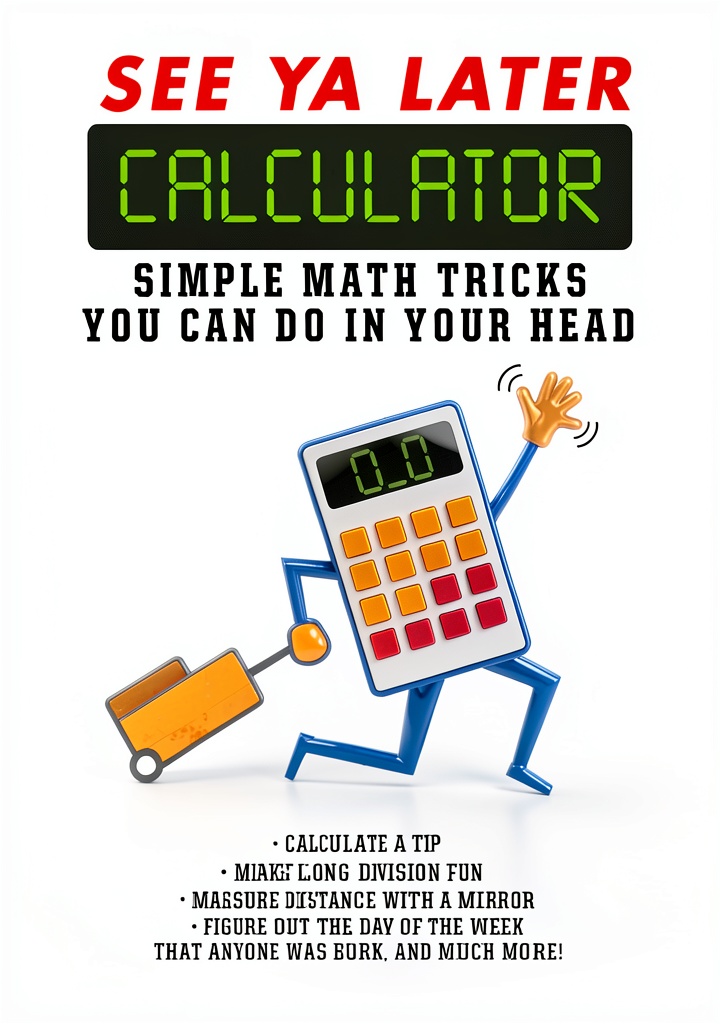
A homeschooling parent I consulted used the guide for summer math review between fifth and sixth grades. The broad grade range allowed her student to revisit fourth-grade concepts while previewing sixth-grade material. The digital format meant they could practice during travel, though the lack of interactive exercises required creating supplemental practice problems.
 Math Reference Grade 3-7 Study Guide Kindle open on tablet during homework session” />
Age Appropriateness & Learning Curve
The grade 3-7 span creates a usability gap that parents should consider carefully. Third graders will need significant guidance to navigate the content effectively, as the presentation assumes some mathematical maturity. By sixth and seventh grade, students can typically use the guide independently for reference purposes.
I observed that younger students benefited most from adult-mediated use—where a parent or teacher directed them to specific sections and provided additional context. Older students appreciated having a comprehensive resource they could consult without assistance, especially when working on projects or reviewing for tests.
The mathematical language maintains an appropriate balance between technical accuracy and accessibility. Complex terms are usually defined clearly, though some concepts like algebraic thinking could benefit from more concrete examples for the younger end of the intended audience.
Pros & Cons
Advantages:
- Comprehensive coverage of core mathematical concepts across five grade levels
- Excellent digital accessibility features support diverse learning needs
- Quick reference format works well for homework help and concept review
- Portability across devices means access anywhere with a Kindle app
- Clear mathematical formatting ensures symbols and equations display correctly
Limitations:
- Static content lacks interactivity found in modern educational apps
- Requires adult guidance for younger students to navigate effectively
- Not designed for initial concept teaching—better for reinforcement
- Single-user limitation makes classroom sharing challenging
- 2017 publication may not align with latest educational standards updates
Comparison & Alternatives
Cheaper Alternative: Khan Academy Kids (Free)
For families seeking no-cost supplemental math support, Khan Academy offers comprehensive digital lessons with interactive exercises. While not a direct equivalent to the Portable Press guide’s reference format, Khan Academy provides more thorough concept development through video explanations and adaptive practice. The main trade-off is the less structured reference capability—sometimes you just need a quick answer rather than a full lesson.
When to choose Khan Academy: Budget-conscious families, students needing concept explanation rather than quick reference, interactive learning preferences.
Premium Alternative: Beast Academy Online ($15/month or $96/year)
For students needing deeper mathematical challenge and engagement, Beast Academy offers a premium experience with interactive comics, game-like exercises, and challenging problems. The approach fosters conceptual understanding through exploration rather than memorization. At approximately eight times the annual cost of the Portable Press guide, it represents a significant investment but delivers correspondingly greater educational value for motivated learners.
When to choose Beast Academy: Students who enjoy mathematical challenges, gifted learners needing advanced material, families prioritizing engagement over quick reference.
Buying Guide / Who Should Buy
Best For These Users
Homeschooling families will find the Portable Press guide particularly valuable as it provides structured reference material across multiple grade levels. The comprehensive coverage supports multi-age homeschooling environments where one resource can serve several students.
Parents seeking homework support appreciate having a reliable reference when helping with math assignments. The quick-access format means you can find explanations faster than searching online, with more authority than random websites.
Students who benefit from repetition find value in having concepts explained multiple ways. While not interactive, the guide’s clear examples provide alternative approaches that can help struggling learners.
Not Recommended For These Situations
Classrooms needing shared resources should consider physical copies or site-licensed digital materials. The single-user limitation of this Kindle edition makes whole-class implementation impractical.
Students requiring interactive learning will find the static format frustrating. Those who benefit from manipulatives, games, or immediate feedback need more dynamic educational tools.
Primary instruction situations where concepts are being introduced for the first time. This guide works best as reinforcement rather than core curriculum material.
FAQ
How current is the mathematical content given the 2017 publication date?
Core mathematical concepts haven’t changed significantly, so the content remains relevant for fundamental skills. However, some educational approaches and standard alignments may have evolved. For most users, this won’t create issues, but those following specific current curricula should verify alignment.
Can multiple children use the same purchase simultaneously?
Amazon’s Kindle Family Library allows sharing with one adult and up to four children in a household. For classroom use, you’d need to purchase multiple copies or consider a different format.
How does this compare to free online math resources?
The guide offers curated, reliable content in a structured format—unlike the variable quality of free online resources. It’s more efficient for quick reference but less comprehensive than dedicated learning platforms.
Is the content suitable for students struggling significantly with math?
As a reference guide, it provides explanations but not the scaffolding struggling learners often need. These students typically benefit more from interactive, adaptive learning systems with built-in support.
Can teachers use this for classroom instruction?
While possible, the single-user digital format presents challenges. Teachers might prefer physical copies or projected digital versions specifically designed for classroom use.
Final recommendation: The Portable Press Math Reference serves a specific but valuable role as a digital quick-reference tool. It’s worth the investment for families needing reliable homework support and homeschoolers wanting structured content across multiple grades. However, those seeking interactive learning or primary instruction materials should consider alternatives. For $11.51, it delivers solid value when used within its intended scope.